Tutorial 8 of 10
Trip desk: Schengen days, packing, drive cost and passports
Beginner 10 min
Count Schengen days under the 90/180 rule, get a packing list for the weather, split the fuel and tolls of a road trip and catch a passport that runs out too soon.
The Trip desk gets a trip ready in four steps: are the Schengen days enough, what goes in the suitcase, what the drive costs each person, and is every passport valid long enough? Open File → New from template… → Road trip to the Alps to follow along, then choose Trip desk in the section list (or press T). In the template the Carters drive from Bristol to Annecy and Lake Garda for two weeks.
1. Schengen 90/180 days
If you need no visa for the Schengen area, you may stay at most 90 days in any 180-day period. The day of entry and the day of exit both count.
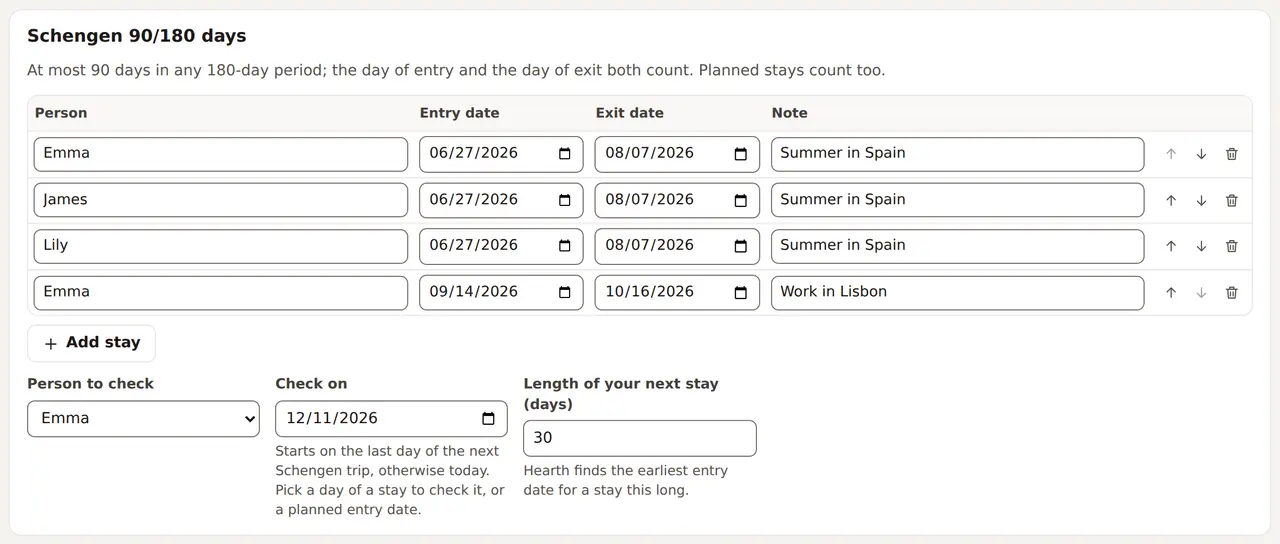
- In Stays in the Schengen area add one row per past or planned stay: the Person, the Entry date, the Exit date and a Note. Take the dates from the passport stamps.
- Trips you mark as a stay in the Schengen area (step 2) count automatically for their travellers.
- Choose the Person to check. Check on starts on the last day of that person's next Schengen trip; pick any other day to check it, or a date you plan to enter.
- Set the Length of your next stay (days) to find the earliest entry date for it.
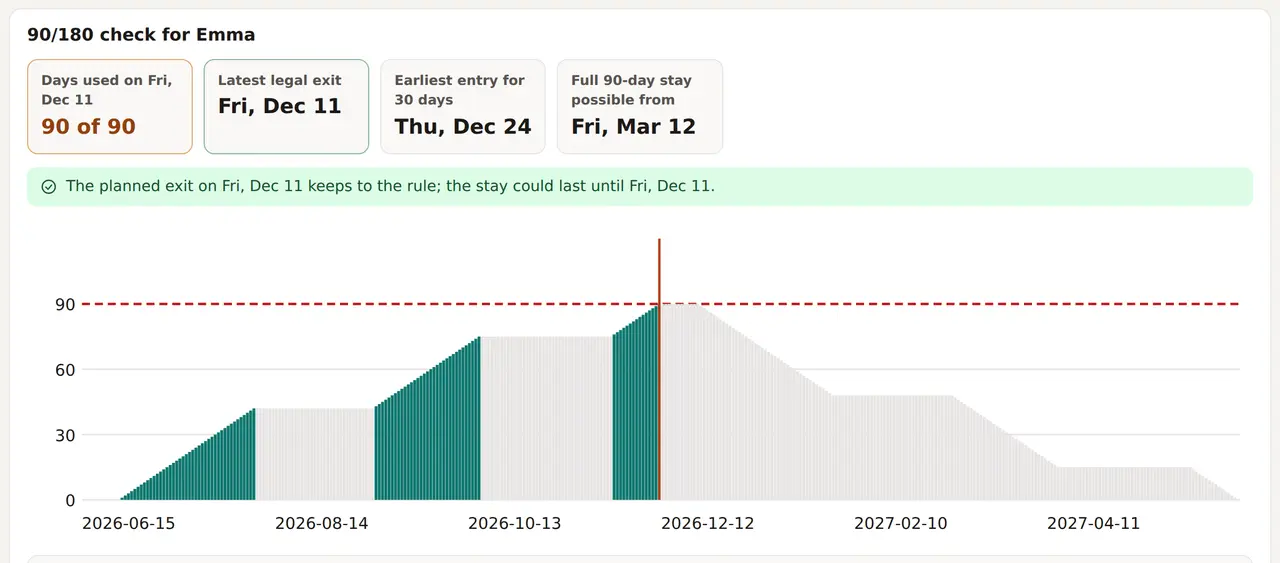
The check shows the days used on that date, the latest legal exit, the earliest entry for your next stay and the date from which a full 90-day stay is possible. The chart shows the days used for every day around the check date; the dashed red line is the limit. In the template Emma reaches exactly 90 of 90 days on the last day of the trip — allowed, but not one day more.
2. Trip dates and packing
Under Trip choose the trip, then fill in Trip dates and travellers: the Departure date, the Return date and, if not everyone goes, the Travellers (optional). Tick the box if the trip is a stay in the Schengen area.
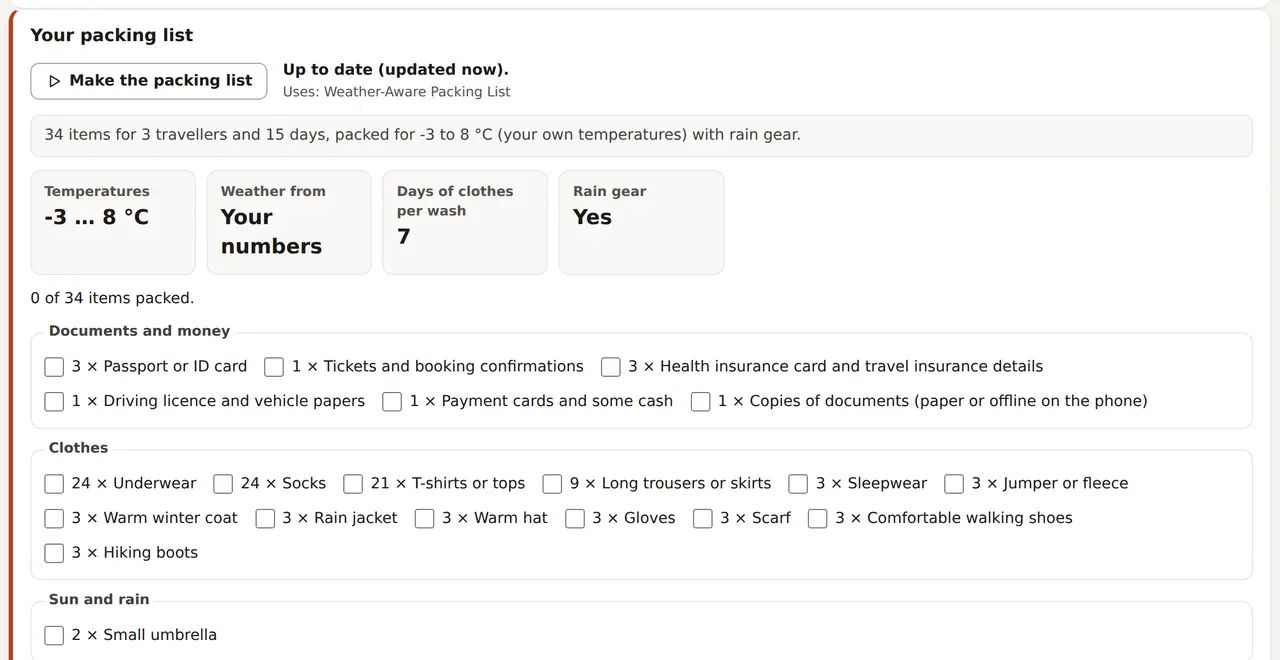
In Packing list enter the Destination (latitude, longitude) and choose the Weather: for a trip within about eight days Hearth reads the MET Norway forecast, further ahead the 1991–2020 climate normals (Germany and the United States), or use your own temperatures. Then set the laundry, how you travel, the Kind of trip and Your own items (optional), and press Make the packing list.
The list counts every traveller: children and babies get their own items. Tick things off as you pack — the ticks are saved, and the dashboard shows what is left.
3. Road trip: fuel or charging cost
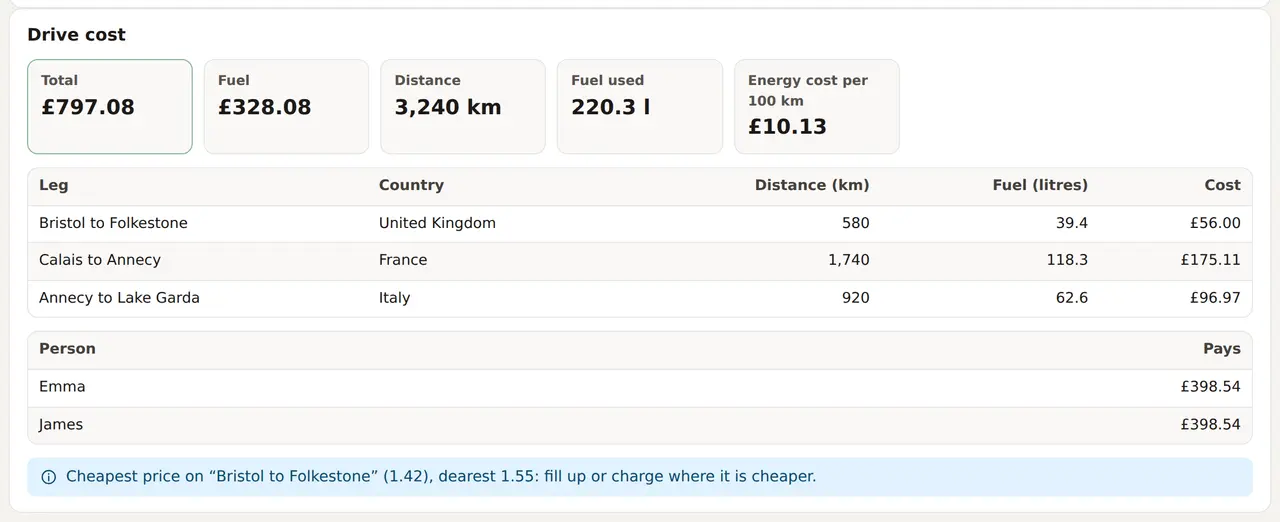
Choose the Vehicle and its Consumption, how many people share and their Names (optional). Under Legs and prices add each part of the drive with the country, the distance and the price you expect there; tick Drive every leg there and back instead of entering the way home. Tolls, vignettes, ferries and parking go under Tolls, vignettes, ferries, parking.
Drive cost updates as you type: the total, the cost per leg and what each person pays, split to the cent.
4. Travel documents
Add each passport, ID card or driving licence with its Valid until date, the Months valid after the trip that the destination requires and the Reminder (weeks before). Choose the Trip it is for. Look up the rule yourself: for the Schengen area, a passport usually has to be valid for three months after you leave.
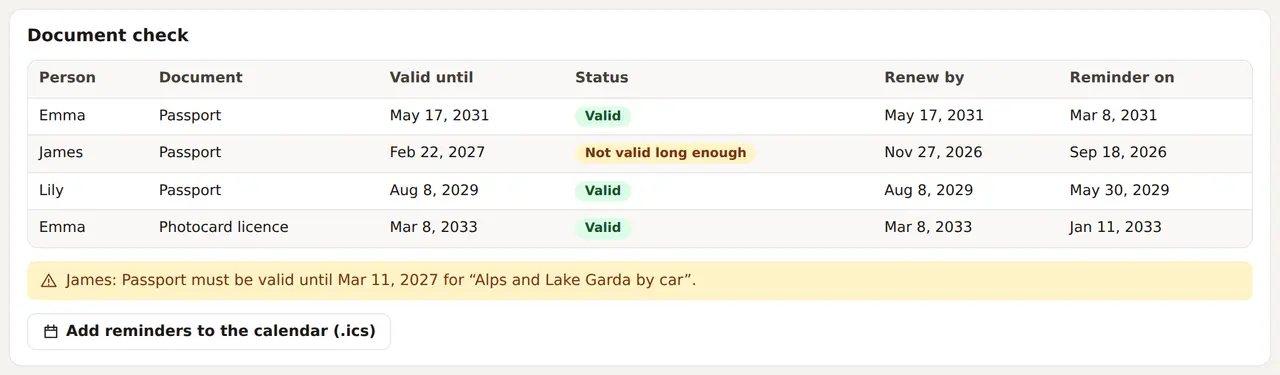
Document check shows whether each document is valid long enough, the date to renew it by and the reminder date. Add reminders to the calendar (.ics) puts the reminders, the Schengen limits and the packing day into your calendar.
Good to know
- The Schengen counter is a planning aid: border guards and the European Commission's short-stay calculator decide, and visas, residence permits and bilateral agreements are not modelled.
- The dashboard lists Trip desk findings, such as a passport that needs renewing or a Schengen trip that runs over the limit.
- The Report includes the travel documents and the drive cost per person.
Ready to try it?